
This Page Is Not About Us
This page is not really about NetOps Africa. It is about the uncertainty every MSP owner feels before booking a meeting with a staffing partner. You have been burned before, or you know someone who has, and the question underneath every offshore conversation is the same one: can I actually trust these people to help build my team?
Choosing an offshore staffing partner is not simply about where engineers are located. Location matters, but it is the easy part. The harder part is whether the people helping you hire understand what a great MSP engineer looks like, whether they will stand behind their placements, and whether they treat your business as a long-term partnership or a transaction.
NetOps Africa was built to reduce that uncertainty. We combine five things that rarely come together in one place:
- US-based MSP leadership who have run service delivery from the inside
- South African engineering talent in a time zone that overlaps US business hours
- Operational excellence across HR, payroll, onboarding, and support
- Long-term partnerships built around engineer retention
- Professional, MSP-specific recruitment rather than generic resume matching
Most offshore conversations start in the wrong place. They start with rates, headcount, and how quickly someone can start. Those questions matter eventually, but they are not what keeps an MSP owner up at night. What keeps you up is the risk: the risk of a bad interaction in front of a client you have served for a decade, the risk of training someone for three months only to watch them leave, the risk of handing access to your environment to a company you do not really know. We built this page to address that risk directly, before money ever enters the conversation.
The rest of this page exists to show you the people and the thinking behind that model, so that by the time you book a call, the only thing left to discuss is whether we are the right fit for your MSP.
Why Experience Matters
Technical recruiting for MSPs is genuinely different from general IT recruiting. A brilliant engineer who has only ever worked in a single corporate environment may struggle inside an MSP, because the job is not just technical. It is a service business, and the engineer is part of the service.
When we evaluate someone for an MSP role, we are weighing qualities that a job description rarely captures:
- Client communication
- Service delivery
- Documentation
- Ownership
- Utilization
- SLAs
- Escalations
- Technical capability
- Professionalism
- Customer service
None of those qualities can be reliably identified simply by reading a resume. It tells you what someone has touched. It does not tell you whether they document their work so the next technician can pick it up, whether they take ownership of a messy ticket instead of bouncing it, or whether they can talk to a frustrated client and leave them calmer than they found them.
Consider two engineers with identical certifications and similar years of experience. On paper they look the same. In practice, one closes tickets cleanly with notes the next person can follow, keeps the client informed at every step, and flags a recurring problem before it becomes an outage. The other technically resolves the same issues but leaves thin documentation, goes quiet under pressure, and creates rework downstream. The difference between them never appears on a resume, yet it is the entire difference between an engineer who protects your margins and one who erodes them.
That is why NetOps Africa evaluates candidates through the lens of practical MSP experience. We screen for the behaviors that make an engineer effective inside a managed service environment, because we have spent years watching which engineers thrive in those environments and which ones quietly create more work than they resolve. To see how that screening works in detail, read about how we vet engineers for MSP environments.
Why This Matters
Hiring an engineer is easy. Hiring the right engineer is hard.
Anyone can fill a seat. The market is full of candidates, and you could make an offer this week. The difficulty is not finding a body. It is finding the person who will protect your client relationships rather than strain them, and who will still be with you in two years.
The wrong hire is expensive in ways that never show up cleanly on a spreadsheet. It costs you:
- Client relationships, when a poor interaction erodes trust you spent years building
- Time, as tickets get reworked and escalations pile up
- Training, repeated every time a placement does not work out
- Money, in lost productivity and the cost of replacing someone
- Management attention, the scarcest resource an MSP owner has
Our leadership team has spent years hiring, leading, and managing engineers inside US MSPs. We have felt the cost of the wrong hire personally, and we have learned what the right one looks like. That experience is the difference between a staffing partner who sends you candidates and one who helps you build a team. It is also why so many MSPs use us as part of a structured MSP staff augmentation approach rather than ad-hoc hiring.
Meet the Leadership Team
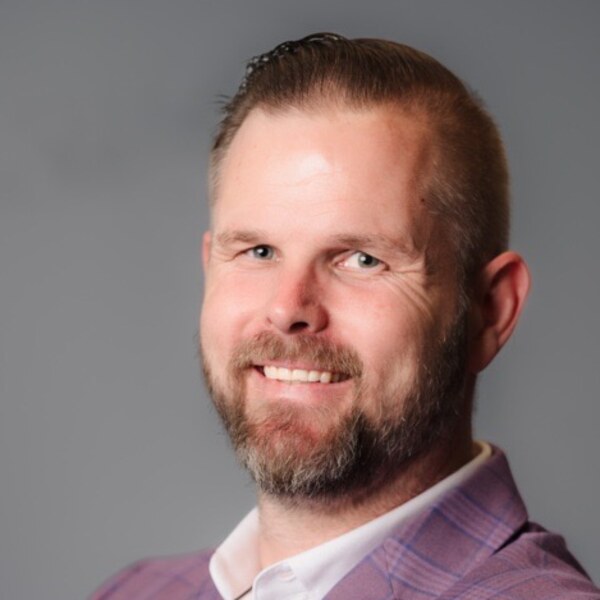
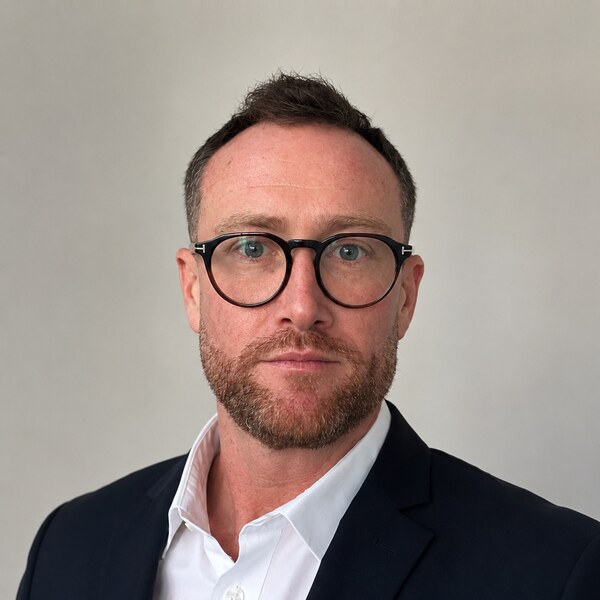
When you work with NetOps Africa, you are working directly with operators who have lived the MSP business, not a faceless account manager reading from a script. Between them, the founders have spent years on both sides of the partnership: building and leading engineering teams inside US MSPs, and running the South African operation that recruits, supports, and retains the talent. That combination is deliberate, and it is the reason the model holds together.
Shane Betrix
Shane built his entire professional career inside the United States MSP industry. He has worked across systems engineering, managed services, engineering leadership, service delivery, and senior technology leadership, which means he has lived the same operational challenges MSP owners face every day: the hiring crunch, the utilization targets, the escalation that lands at 4:55 on a Friday.
He founded NetOps Africa because he believes US MSPs deserve a better staffing model than the shared-pool offshore options on the market. Having grown up between South Africa and the US, he saw firsthand the depth of South African engineering talent and the cultural alignment that makes it work for American businesses, and he built a company to connect the two.
Ramon Smith
Ramon has spent more than 15 years helping technology businesses improve operations, build stronger teams, and solve complex business challenges. His background spans managed services, project management, recruiting, process improvement, business leadership, and automation, giving him a practical understanding of how growing MSPs operate—and where they often struggle.
Rather than simply filling positions, Ramon works closely with MSP owners to understand the business behind the hiring need. He helps define the right role, determine the appropriate technical level, identify the skills that truly matter, and build teams that can scale alongside the business. His focus is on solving operational challenges, not just adding headcount.
Having led complex technology projects, improved business processes, built recruiting functions, and worked alongside executive leadership teams, Ramon understands the balance between technical excellence, customer service, operational efficiency, and profitability. He believes the best hiring decisions come from understanding how people, processes, and technology work together to support long-term growth.
Today, Ramon leads NetOps Africa's technology, automation, and operational improvement initiatives. He is responsible for continually refining the systems that support candidate sourcing, evaluation, and client delivery, helping the team reduce manual effort, improve consistency, and spend more time building relationships with both clients and candidates.
His systems-oriented approach ensures NetOps Africa continues to deliver a reliable, scalable, and high-quality experience for MSPs looking to build long-term technical teams.
Ultimately, Ramon believes successful hiring isn't about finding people to fill vacancies—it's about helping MSPs build stronger businesses through the right people, processes, and systems.
Dale Knowles
Dale runs the operational engine of NetOps Africa: operations, recruitment operations, HR, finance, payroll, client onboarding, automation, AI initiatives, business systems, and continuous improvement. If something needs to run smoothly and repeatably, it sits in Dale's domain.
Dale's background is in electronic engineering, and his career has spanned engineering, software development, automation, AI initiatives, business systems, operational leadership, and continuous improvement. Earlier in his career he built and exited an engineering business that combined hardware, software, and embedded technology development, before turning his focus to operational leadership and business growth.
His real role is to bridge South African engineering talent with US operational expectations. That means making sure an engineer in Cape Town is onboarded, paid, supported, and held to the same professional standards a US MSP would expect from an in-house hire, so the experience feels seamless on both sides of the partnership.
Why Dedicated Engineers Outperform Shared Resources
The structure of an offshore engagement shapes the outcome long before any individual engineer is chosen. A dedicated model and a shared-pool model produce very different experiences for an MSP, even with similarly skilled people. In a shared pool, an engineer might support your tickets this week and someone else's next week, never building real familiarity with your clients, your documentation, or your standards. In a dedicated model, that familiarity is the whole point. Here is how the two compare.
| Traditional Offshore Model | NetOps Africa |
|---|---|
| Shared resource pool | Dedicated engineer |
| Call center environment | Professional home office |
| Splits attention across multiple clients | Works for your MSP only |
| Generic recruiting | MSP-specific evaluation |
| Transactional relationship | Long-term partnership |
| High turnover | Retention focused |
A dedicated engineer learns your clients, your tools, and your standards, and that knowledge compounds month after month. Learn more about how this works with our dedicated remote engineers.
Built For Focus
The environment an engineer works in shapes the experience your clients receive. Our engineers work from dedicated, professional home offices set up for serious technical work, not from a crowded floor where the person next to them is on a different client's call.
That setup is designed to deliver a consistent, professional experience:
- A quiet working environment
- Professional video meetings
- Reduced distractions
- Clearer communication
- Backup power expectations
- Backup connectivity expectations
- A professional customer experience
Every engineer is expected to meet defined business continuity standards, including backup connectivity and backup power where the role requires it, so their ability to support your clients stays consistent and reliable. The goal is simple: when your client gets on a call with your engineer, it sounds and feels like talking to a member of your own team.
This focus pays off in the small moments that clients actually notice. A call without background chatter. An engineer who can share their screen and walk a user through a fix without the connection dropping. A consistent presence during your business hours rather than a rotating cast of voices. None of this is glamorous, but it is exactly the kind of reliability that turns a remote engineer into a trusted extension of your service desk.
We Speak MSP
When you talk to most staffing companies, you spend the first half of the conversation explaining your own business. You describe what a PSA is, why ticket queues matter, and what you mean by utilization. That is time you should not have to spend.
Our leadership has spent careers inside MSPs, so the language is already shared. We know what it means when your PSA and RMM are not talking to each other cleanly, why Conditional Access policies in Azure and Microsoft 365 need to be handled carefully, and how a backlog in your ticket queues turns into missed SLAs and unhappy clients.
We understand that escalations need to move to the right level quickly, that documentation is what separates a scalable MSP from a fragile one, and that client onboarding sets the tone for the entire relationship. We know utilization is both a profitability metric and a burnout warning, and that service delivery lives or dies on consistent communication.
When we evaluate an engineer for your team, we are listening for whether they speak this language too. It is one of the clearest signals that someone will integrate quickly into your MSP outsourcing model rather than needing months to find their footing.
More Than Recruitment
When you work with NetOps Africa, you are not working with recruiters who happen to fill IT roles. You are working with experienced MSP professionals who think about your team the way you do. One of the questions we regularly ask ourselves is simple: “Would we hire this person into our own MSP?” If the answer is no, we won't recommend them to a client.
That shows up in the conversations before a single resume is shared. Our team helps you with:
- Role design, so the position you hire for matches the gap in your service delivery
- Technical level guidance, helping you decide whether you need an L1, an L2, or an L3
- Candidate fit, weighing personality and communication alongside technical skill
- Team growth, planning how a role fits into where your MSP is heading
- Long-term hiring, building a team rather than plugging a single gap
We have seen what happens when an MSP hires reactively, filling whatever seat hurts most this month, and we have seen the difference it makes when someone with real recruitment and delivery experience helps shape those decisions. Often the most valuable thing we do is tell a client that the role they think they need is not the role that will actually solve their problem. That kind of guidance only comes from people who have built and led MSP teams themselves.
A good example is the MSP owner who comes to us convinced they need another senior engineer, because their senior engineers are drowning. Sometimes that is right. Just as often, the real fix is an L1 or L2 placement to absorb the routine tickets that should never have reached a senior in the first place, freeing your most expensive people to do the work only they can do. Getting that distinction right protects both your margins and your best engineers from burnout, and it is the kind of conversation we would rather have before a hire than after a mistake.
Why Clients Choose NetOps Africa
US-based MSP leadership
People who have run service delivery inside US MSPs.
US LLC
A US-registered company you can contract with confidently.
Dedicated engineers
Your engineer works only for your MSP.
South African talent
Skilled, native-English engineers in an aligned time zone.
Professional communication
Clear, consistent, client-ready interaction.
Long-term partnerships
Relationships built to last, not transactions.
MSP-specific recruitment
Candidates evaluated for MSP service delivery.
Client-controlled security
You keep control of access, identity, and data.
Trust
Earned through experience, honesty, and accountability.
Security deserves a special mention, because it is where trust is most often tested. Engineers work inside your environment under your policies, and you stay in control throughout. Read more about our approach to trust, security, and compliance.
What You'll Notice When Working With Us
MSP owners often tell us that their first conversation with NetOps Africa feels different from other staffing calls, and it usually takes a moment to put a finger on why. The difference is simple: we naturally talk about the things that actually keep an MSP running well, because we have run them ourselves. We are not selling resumes by the hour. We are helping you build a team.
That experience shows up in the details. Without being prompted, the discussion tends to move toward the things that determine whether a hire succeeds or quietly drags your operation down:
- Service delivery quality. How tickets actually get resolved, not just closed.
- Communication. Clear, professional, client-ready English and proactive updates.
- Documentation. Notes and runbooks that the rest of your team can rely on.
- Ownership. Engineers who follow problems through instead of bouncing them.
- Engineer fit. Matching temperament and skill to your stack and your clients.
- Long-term retention. Building stability so you are not re-hiring every year.
- Onboarding. A structured first few weeks so people ramp into your systems.
- Scalability. Adding capacity role by role as your revenue grows.
- Client experience. How every interaction reflects on your brand, not ours.
None of these are afterthoughts for us. They are the same questions we asked ourselves when we were the ones answering to clients, hitting SLAs, and trying to keep good engineers from burning out. Because our leadership has lived inside the MSP world, we instinctively screen for the behaviors that hold up under real pressure, not just the certifications that look good on paper.
The result is a working relationship that feels less like hiring a vendor and more like extending your own team. You will notice it in how candidates present, how engineers communicate once they are placed, and how steadily the relationship holds up over months and years. That steadiness — capable people who stay, integrate, and represent you well — is ultimately why US MSPs trust NetOps Africa.
Our Commitment Doesn't End When Your Engineer Starts
Most staffing companies measure success by making the placement. We measure success by making the placement successful.
Because our founders have built and led MSPs themselves, we understand that real operational challenges don't stop the day an engineer joins your team. When genuine people or operational issues arise, we are available to help navigate the situation, drawing on real MSP leadership experience rather than a generic account-management playbook.
Sometimes that means helping an engineer regain confidence during a demanding onboarding. Sometimes it means helping a client work through expectations, communication, or team dynamics. In every case, the aim is the same: keep the relationship healthy and productive for both sides.
Our goal is not to replace your management team, and day-to-day direction always stays with you. Our goal is to help protect the success of the relationship you have invested in. That is simply how we have always operated.
Ready to Build Your Next Great Engineer?
Spend 30 minutes with people who have built MSP teams from the inside. We will look at your current setup and tell you honestly whether dedicated South African engineers are the right fit.
Prefer to reach out directly? Contact us.
Frequently Asked Questions
Is NetOps Africa a US company?
NetOps Africa is led by US-based MSP professionals and operates through a US LLC, while our engineering talent is based in South Africa. You work with leadership who understand the US MSP market and have run service delivery inside it, paired with dedicated engineers in a single, aligned time zone with US business hours.
What makes NetOps Africa different from a traditional offshore provider?
Traditional offshore models often place shared resources from a call-center pool across many clients. NetOps Africa places dedicated engineers who work only for your MSP, are evaluated specifically for MSP service delivery, and are supported through a long-term partnership focused on retention rather than transactional headcount.
How does NetOps Africa evaluate engineers for MSP work?
We evaluate candidates against the realities of MSP service delivery, not just a resume: client communication, documentation discipline, ownership, utilization, SLA awareness, escalation handling, technical capability, and professionalism. Because our leadership has hired and managed engineers inside US MSPs, we know what those qualities look like in practice. See our vetting process for details.
Do I manage the engineer or does NetOps Africa?
Your engineer works as a dedicated member of your team, inside your PSA and RMM, joining your standups and following your processes. NetOps Africa handles employer-of-record administration, HR, payroll, and ongoing support, while day-to-day technical direction stays with you.
How is security and client data handled?
Security stays under your control. Engineers work inside your environment through your access, identity, and endpoint policies, with least-privilege permissions and audit logging. South Africa's POPIA framework is modeled on GDPR, which simplifies data-handling alignment for many US MSPs and their regulated clients. Learn more about trust, security, and compliance.
What roles can NetOps Africa help me fill?
We place L1 service desk analysts, L2 and L3 engineers, NOC staff, Microsoft 365 and Azure administrators, and project resources. Our team also helps with role design and technical-level guidance so the role you hire for actually matches the gap in your service delivery. Explore our MSP outsourcing model for the full picture.
Can I start with one engineer and scale later?
Yes. Most MSPs begin with a single placement to validate the model, then grow to a stable pod as confidence builds. Because the same engineers stay with your clients over time, scaling adds capacity without resetting institutional knowledge.
What happens on a Discovery Call?
It is a consultative conversation, not a sales pitch. We walk through your current setup, the gaps you are trying to close, and whether dedicated South African engineers are a good fit for your MSP. If it is not the right fit, we will tell you honestly. You can contact us or book directly.